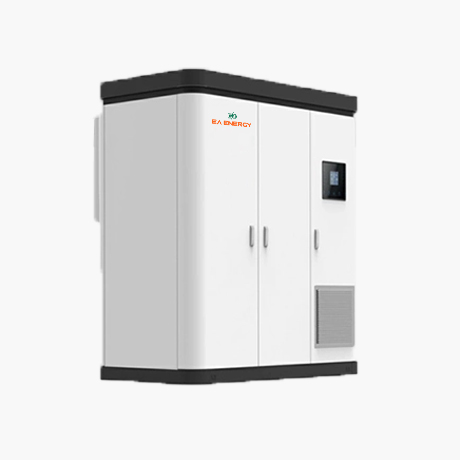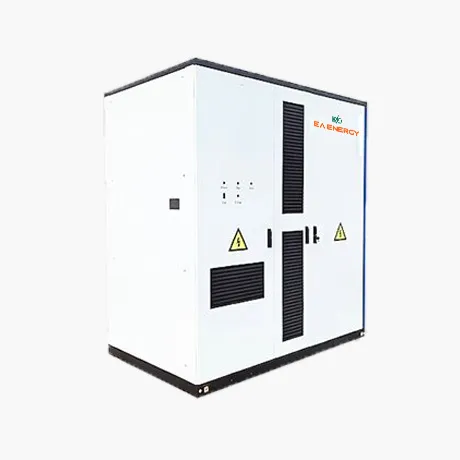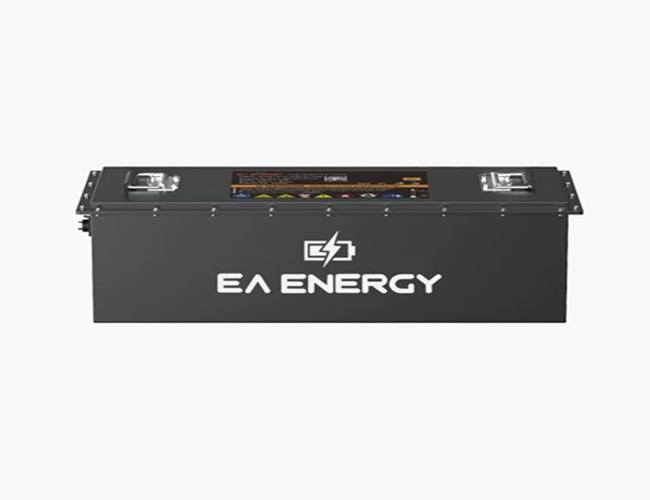
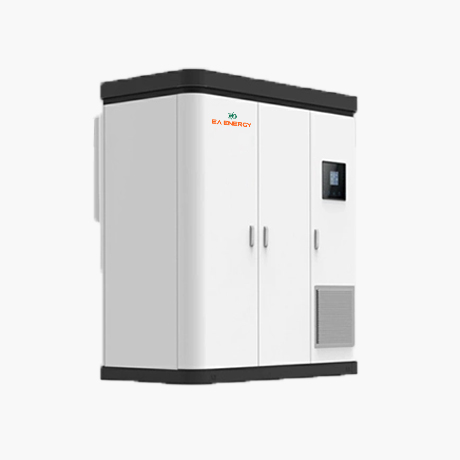
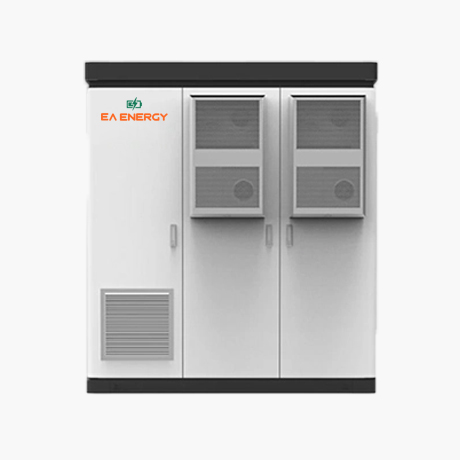
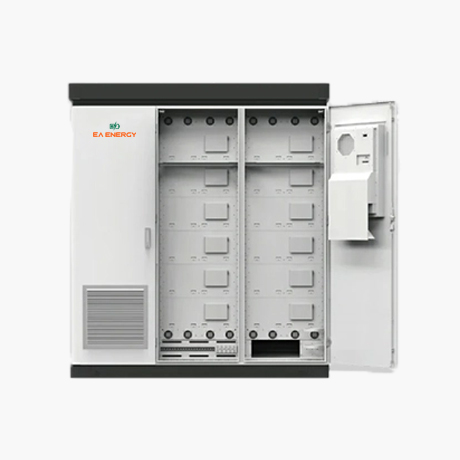
The EA-EES Industrial High Voltage Energy Storage System features a modular architecture for seamless scalability and flexible deployment, adapting effortlessly to evolving energy demands. Built-in local monitoring enables comprehensive equipment management, detecting faults early for rapid resolution and enhanced reliability. Integrated with station-level systems, it supports multi-machine coordination for independent control, optimizing operational efficiency. Real-time status tracking and data logging within the cabinet ensure precise performance oversight, extending battery cycle life through proactive maintenance. A smart temperature control system maintains optimal operating conditions, further boosting durability and energy output. Designed for industrial resilience, this system balances scalability, intelligent management, and adaptive performance to meet today’s and tomorrow’s energy storage requirements.
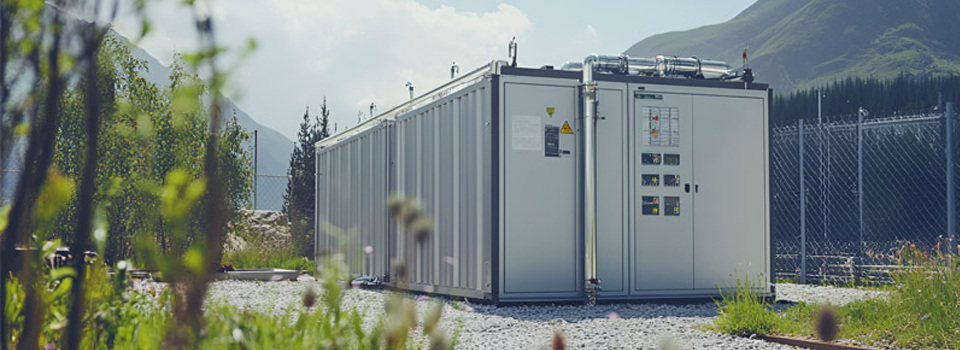
EA ENERGY's Industrial High Voltage Energy Storage System excels in scalability and efficiency, featuring a modular design for seamless capacity expansion and high-voltage direct-connection technology that eliminates transformers, reducing equipment by 80% and optimizing space utilization . With built-in AI-driven monitoring, it tracks over 1,200 parameters for millisecond-level fault detection and predictive maintenance, ensuring 99.2% grid regulation accuracy and ≤20ms response time . Its decentralized BMS achieves ≤2°C cell temperature variance and annual capacity decay ≤1.5%, while smart thermal control maintains ≥92% efficiency across -30°C~55°C . The four-layer safety network, including UL 9540A-certified thermal runaway containment and 100MΩ DC insulation, ensures extreme reliability. By integrating VSG/PQ/VF control modes and supporting 20+ grid services, it enables 10ms charge-discharge switching and reduces transmission losses by 10% through localized energy supply. Ideal for industrial resilience, this system balances scalability, intelligent management, and adaptive performance to meet evolving energy demands among commercial energy storage solutions.
The EA-EES system from Lithium-ion battery supplier features a modular architecture with standardized 110KW/205KWh unit configurations. It supports linear capacity expansion by adding energy storage AC/DC integrated cabins. The unique high-voltage direct-connection technology eliminates the need for traditional step-up transformers, reducing parallel equipment by over 80% and minimizing system complexity and footprint—ideal for space-constrained industrial sites.
Built-in local data monitoring systems real-time collect over 1,200 equipment parameters, combined with AI algorithms for millisecond-level fault localization. The innovative fault bypass and tolerance control technology automatically isolates faulty power units while maintaining full-power operation, reducing annual maintenance frequency by 60%. The system is also certified to standards like UL9540A and GB/T 36276, validated for stability in extreme conditions.
A decentralized fine-control strategy is adopted, with independent BMS (Battery Management System) and liquid-cooling units for each battery cluster, ensuring a cell temperature difference ≤2℃. The dynamic SOC balancing algorithm limits annual capacity decay to ≤1.5%. The intelligent thermal control system integrates phase-change materials and AI prediction models, maintaining ≥92% battery efficiency across a wide temperature range of -30°C to 55°C.
The system employs a four-layer safety protection network:
① Intrinsic safety design: Uses ceramic-coated separators and flame-retardant electrolytes.
② Active early warning: Detects thermal runaway 30 minutes in advance via 128-channel fiber optic temperature sensors.
③ Multi-level fire protection: Includes perfluorohexanone gas suppression, water-based compressed-air foam, and station-level water spray systems.
④ Electrical isolation: Maintains DC-side insulation resistance ≥100MΩ to prevent arc risks.
It supports control modes like VSG (Virtual Synchronous Generator), PQ (Constant Power), and VF (Constant Voltage/Frequency), switching charge-discharge modes within 10ms. The station-level EMS (Energy Management System) integrates multi-source data (wind, solar, storage, load) to enable over 20 grid services, including peak shaving and demand response. Field tests show a frequency regulation response speed ≤20ms and a regulation accuracy of 99.2%.
These answers highlight EA-EES’s technical advantages in scalability, reliability, safety, and grid adaptability, addressing key concerns for industrial energy storage applications.
 English
  Lithium Golf Cart Battery
  Low Speed Vehicle Battery
  Lithium Forklift Battery
  Aerial Work Platform Battery
  Floor Cleaning Machine Battery
  Lithium Marine Battery
  Residential ESS
  Commercial & Industrial ESS
  Truck Electrical System
  RV Electrical System