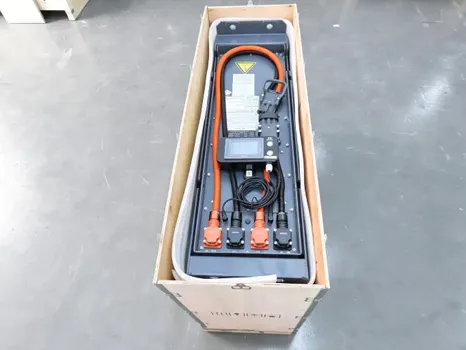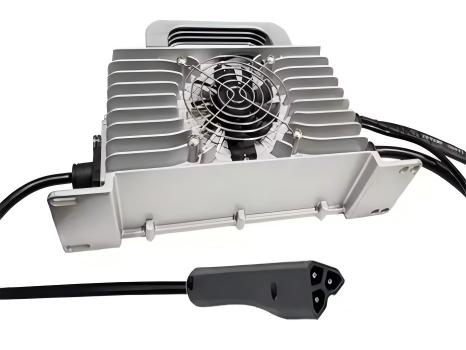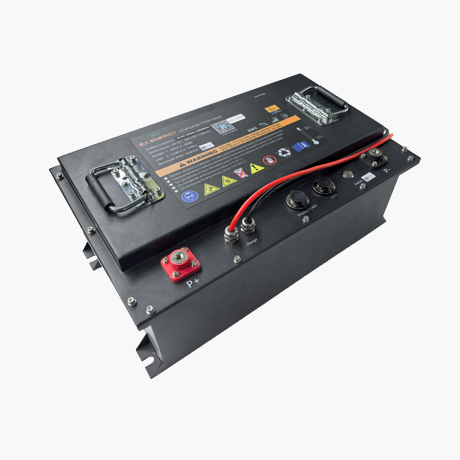
In 2026, lithium charging is no longer "one charger fits all." Voltage profiles, BMS communication, safety protections, and certification requirements vary widely by battery chemistry and application. For distributors and OEM buyers, a bad supplier choice leads to field failures, warranty claims, and compliance risk. This guide highlights the five most common red flags when buying lithium battery charger wholesale, and what to verify to ensure the battery charger for lithium batteries you source is safe, compatible, and scalable.
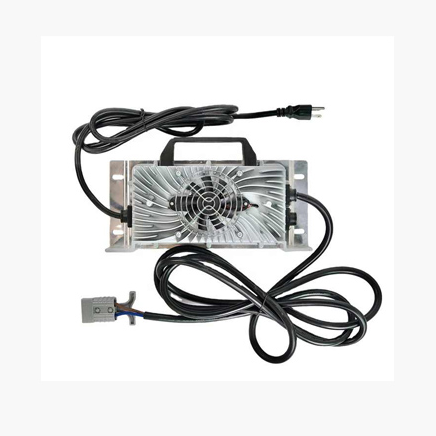
A battery charger for lithium batteries is not a generic power supply. It must deliver a specific voltage, current, and termination sequence that matches the target battery pack's chemistry and BMS parameters. A charger with an undefined or incorrect profile will either undercharge the pack, trigger protective shutdowns, or in the worst case, overcharge cells beyond safe limits.
| Chemistry | Typical Full Charge Voltage | Termination Behavior |
|---|---|---|
| LiFePO4 (lithium iron phosphate) | 3.65V per cell (29.2V for 8S packs) | Current taper to defined cutoff (C/20 typical) |
| NMC (nickel manganese cobalt) | 4.2V per cell (50.4V for 12S packs) | Current taper to defined cutoff |
| LTO (lithium titanate) | 2.85V per cell | Different CC/CV window than NMC or LFP |
Charging profile curve showing CC (constant current) phase and CV (constant voltage) phase behavior
Explicit output voltage and current specifications at rated load
Termination logic — what triggers the charger to stop (cutoff current, timer, or temperature)
List of compatible battery chemistries and cell configurations
Confirmation that the profile is fixed or whether it is adjustable — and if adjustable, how
If a supplier cannot provide a detailed charging profile datasheet, the product is not suitable for a battery charger wholesale program where the end user cannot verify compatibility independently.
A lithium battery charger without clearly documented and tested protection circuits is a liability — not just a quality problem.
| Protection | What It Prevents | Risk If Absent |
|---|---|---|
| Over-voltage protection (OVP) | Prevents output voltage exceeding safe limit if load is disconnected or BMS fails open | Cell overcharge → thermal runaway → fire |
| Over-current protection (OCP) | Limits output current if the load demands more than rated | Cable/connector overheating; battery damage |
| Over-temperature protection (OTP) | Shuts down if the charger or battery temperature exceeds safe limit | Component failure; fire in hot environments |
| Short-circuit protection | Disconnects output on dead short | Immediate failure; potential arc or fire |
| Reverse polarity protection | Prevents damage if connector is connected incorrectly | Component destruction; possible fire |
The most common wholesale quality issue is protection circuits that are listed on the datasheet but implemented with components too weak to reliably operate at rated conditions. Ask for:
Test reports showing the protection threshold (at what voltage does OVP trigger?)
The component specification for the protection ICs or MOSFETs used
A functional sample test: deliberately trigger each protection and confirm it activates and recovers correctly
A charger without appropriate market certifications creates three problems simultaneously: regulatory non-compliance that can halt distribution, customer audit failures that lose accounts, and potential insurance voidance if an incident occurs with a non-certified product.
| Market | Required / Expected Certification |
|---|---|
| European Union | CE marking; LVD and EMC directives; often IEC 62368-1 |
| United States | UL listing or FCC ID; increasingly IEC 62368-1 alignment |
| Australia / New Zealand | RCM marking |
| China domestic | CCC (3C) certification for certain product categories |
| International OEM supply | Often requires IEC 62368-1 or IEC 61851 depending on application |
Request the actual certificate document — not just a logo on a marketing page
Verify the certificate number directly with the certification body's online database
Confirm the certification covers the exact model being purchased — not a similar product in the same line
Check that the physical product label matches the certified specifications
Documentation package to require: user manual with safety warnings, wiring diagram for installer-connected products, compliance declaration (DoC for CE), and test report summary showing the standards tested to.
An experienced wholesale buyer can identify quality risk before any electrical test by inspecting the physical construction.
| Component | Red Flag | Implication |
|---|---|---|
| Output cable | Thin gauge relative to rated current; minimal strain relief at cable entry | Overheating at rated load; premature cable failure |
| Connector | Loose fit; unrated plastic housing; light-duty contacts | Arcing; voltage drop; contact failure under vibration |
| Cooling | No fan with no thermal management justification; noisy or vibrating fan | Thermal shutdown in high ambient temperatures |
| Enclosure sealing | No IP rating stated; visible gaps at seams; poor cable gland design | Dust and moisture ingress in field environments |
| Label quality | Blurred text; incorrect or missing safety symbols; no serial number | Inability to trace product; compliance failure |
| Requirement | Why It Matters |
|---|---|
| IP rating (IP44, IP65, IP67) | Defines protection against dust and water — critical for outdoor or industrial charging |
| Operating temperature range | Must cover the installation environment — warehouse, outdoor cart storage, cold room |
| Cooling method | Convection cooling is more reliable than fan cooling in dusty environments |
| Input voltage range | Single voltage (120V or 230V) versus universal input (100–240V) for multi-market deployment |
| Vibration resistance | Required for mobile equipment charging where the charger is mounted on a vehicle |
The difference between a professional lithium battery charger wholesale supplier and a commodity reseller is visible in the quality documentation:
| Quality Element | Professional Supplier | Commodity Risk Supplier |
|---|---|---|
| Serial number | Unique serial on each unit; traceable to production batch | Generic or sequential number; no batch linkage |
| Burn-in process | Each unit operated at rated load for a defined period before shipping | No burn-in; early failures reach the customer |
| Final inspection record | Documented pass/fail checks per unit or per batch | No records; quality is assumed not verified |
| Batch traceability | Defective field unit traceable to a production lot for recall or investigation | Cannot identify affected units if a field problem emerges |
DOA (dead on arrival) policy: define the percentage and the replacement timeframe — 30 days is a reasonable minimum for DOA coverage
Warranty period: 12 months minimum for commercial distribution; 24 months preferable for OEM programs
Replacement logistics: confirm whether replacement is advance replacement, depot repair, or credit — the logistics model affects your ability to serve customers quickly
Spare parts availability: for installed commercial applications, ask whether the charger can be repaired and whether spare power boards or fans are available
Order samples before any volume commitment — at least 3–5 units representative of production, not special pre-production samples
Test samples with the actual battery packs they will be used with — verify the charging profile, all protections, and connector fit
Run a pilot order of 50–100 units with incoming inspection before scaling to volume
Define incoming inspection criteria: label check, output voltage verification, protection functional test, physical condition inspection
Sourcing a lithium battery charger wholesale is a risk-management decision as much as a cost decision. The best price means little if the battery charger for lithium batteries lacks the correct charge profile, protection circuits, certifications, or QC discipline — because the cost of a field failure, a warranty program, or a compliance halt will exceed the savings on the unit price many times over. Use the five red-flag checklist, validate samples with your actual battery packs, and lock your requirements into a clear specification before placing volume orders.
Q1: Can one charger work for all lithium battery packs?
No — not reliably. Different lithium chemistries (LiFePO4, NMC, LTO) require different full-charge voltage levels and termination behavior. Even within the same chemistry, different BMS configurations may require different charge current profiles or communication protocols. A charger that works correctly with one pack may undercharge, overcharge, or repeatedly trigger BMS shutdowns on another.
Q2: What is the most important specification when buying a battery charger for lithium batteries?
The charging profile — specifically the output voltage at full charge, the CC/CV transition behavior, and the termination criterion (cutoff current). This must be matched to the target battery pack's chemistry and BMS parameters. A charger with the wrong profile is not just inefficient; it can permanently reduce battery capacity or trigger safety shutdowns that make the system unusable.
Q3: What safety protections should I require in a wholesale charger?
Over-voltage protection, over-current protection, over-temperature protection, short-circuit protection, and reverse polarity protection. For outdoor or mobile applications, add IP-rated enclosure, appropriate operating temperature range, and vibration resistance. All protections should be documented with trigger thresholds and verifiable with a functional test on sample units.
Q4: How do I verify a supplier's quality before committing to a bulk order?
Request production samples — not pre-production specials — and test them with your actual battery packs. Verify all protection circuits by deliberately triggering each one and confirming the expected response. Check that serial numbers are present and traceable. Ask for batch records and burn-in documentation. Run a pilot order of 50–100 units with a defined incoming inspection protocol before scaling.
Q5: What information should I provide to get an accurate wholesale quote?
Battery voltage and cell chemistry, desired output current, connector type at the battery interface, input voltage for your region (or universal if multi-market), IP rating requirement, operating temperature range, certification requirements for target markets, expected annual volume, and whether you need charger firmware customization or communication interface (CAN, UART, or BMS handshake protocol).
 English
  Lithium Golf Cart Battery
  Low Speed Vehicle Battery
  Lithium Forklift Battery
  Aerial Work Platform Battery
  Floor Cleaning Machine Battery
  Lithium Marine Battery
  Residential ESS
  Commercial & Industrial ESS
  Truck Electrical System
  RV Electrical System