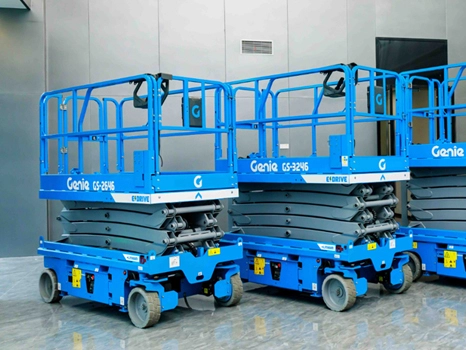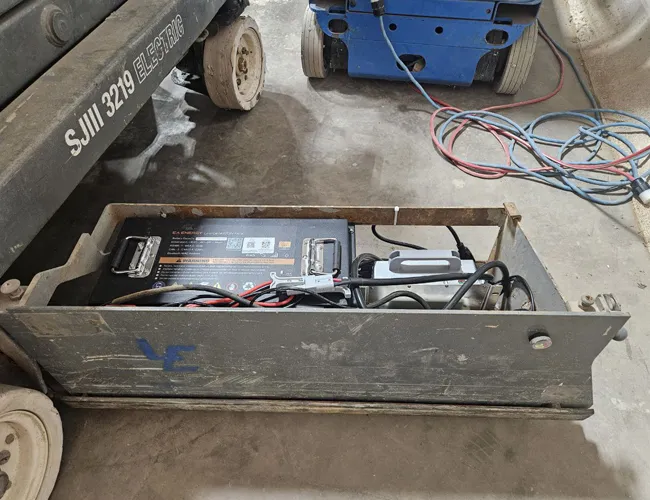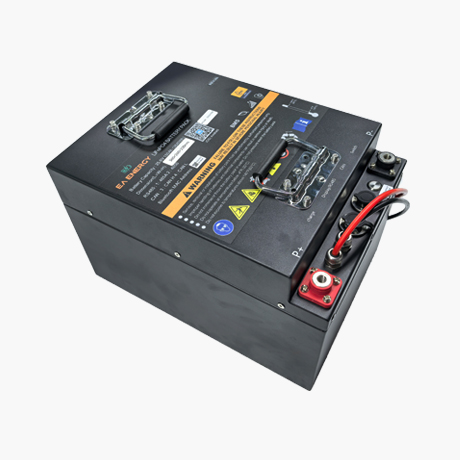
For commercial and industrial fleet operators, transitioning to lithium-ion or lithium iron phosphate (LiFePO4) battery technology is a major step toward operational efficiency. However, many warehouse managers, resort operators, and logistics supervisors make the costly mistake of treating their charging infrastructure as an afterthought.
The truth is, a lithium battery is only as reliable as the device feeding it power. Relying on basic, outdated, or mismatched charging equipment can silently degrade your battery cells, increase downtime, and lead to premature battery failure.
To maximize the return on your motive power assets, you need a high-efficiency smart lithium battery charger designed specifically for the rigorous demands of industrial operations. Engineered by industry-leading supplier EA BATTERY, our smart charging technology goes beyond simply delivering juice—it acts as a dedicated protection system for your fleet investment.
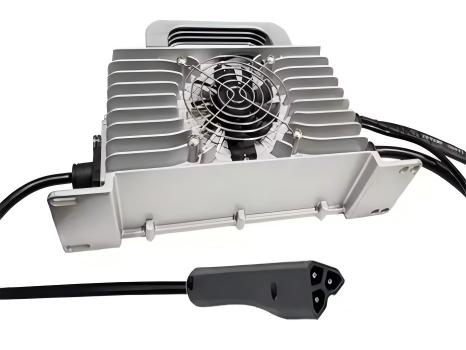
Traditional lead-acid chargers deliver power using a crude, rigid voltage profile that can easily cook or undercharge modern lithium chemistry. A smart lithium battery charging box, on the other hand, utilizes complex digital processing to continuously communicate with and adapt to the battery pack.
At the core of a smart system is the CC-CV (Constant Current - Constant Voltage) algorithm. Unlike old-school chargers that pump high current indiscriminately, a smart charger operates in precise, distinct stages:
Constant Current (CC) Phase: The charger delivers a steady, maximum safe current to rapidly build up the battery’s State of Charge (SOC) to approximately 80% without overheating the cells.
Constant Voltage (CV) Phase: As the battery nears its capacity, the charger maintains a constant target voltage (such as 3.65V per cell for LiFePO4 chemistry) while smoothly tapering down the current. This prevents localized overcharging and allows individual cells to balance safely.
Automatic Cut-Off: Once full capacity is reached, the charger completely shuts down or switches to a safe monitoring state, preventing the continuous trickle-charging that ruins lithium structures.
By utilizing this precise feedback loop, the EA BATTERY LiFePO4 Battery Charger Series optimizes energy transfer while protecting battery health, achieving a high 90%+ conversion efficiency (up to 95% on select models) to minimize operational energy waste.
An industrial battery pack represents a massive portion of an electric vehicle's total cost. Whether you manage a fleet of aerial work platforms, resort shuttles, warehouse forklifts, or golf carts, extending the operational life of these batteries is key to reducing your total cost of ownership (TCO).
Standard charging units often trigger micro-overcharging, high-temperature spikes, or cell imbalances, which lead to accelerated capacity fade. By pairing your fleet with an intelligent lithium battery charging box, you can extend your overall battery lifespan by up to 30% compared to using conventional charging equipment.
Smart chargers preserve battery health primarily through active thermal management, dynamically modulating the charging speed based on real-time ambient and internal temperatures to support safe charging from -20°C to 60°C. Additionally, the system utilizes adaptive current adjustment to read the internal resistance of the pack, automatically tapering the amperage output to prevent electrical stress on aging or unbalanced cells. Finally, the charger works in constant synchronization with the battery's internal Battery Management System (BMS), ensuring that the charging curve aligns perfectly with the real-time physical status of the cells to prevent any premature degradation.
In heavy-duty industrial and commercial environments, safety isn't just a compliance checklist—it is a critical protective barrier for your personnel and physical assets. A high-quality lithium battery charging box does not merely transfer electricity; it serves as a robust defense mechanism against electrical and thermal hazards.
The premium wholesale lithium chargers engineered by EA BATTERY feature comprehensive, multi-layer safeguards built directly into the hardware and software:
Overvoltage & Overcharge Protection: Automatically interrupts the charging cycle if the voltage exceeds safe thresholds, eliminating the risk of thermal runaway.
Short-Circuit & Reverse Polarity Protection: Prevents damaging sparks, fires, or electrical feedback if cables are damaged or incorrectly connected.
IP65-Rated Rugged Housing: Built with a high-end aluminum alloy casing that acts as an integrated heatsink while providing IP65 dust and water resistance. This ensures safe indoor and outdoor operation under harsh conditions, such as damp golf cart sheds or dusty construction sites.
Compliance & Certification: Our industrial charger lineups are fully certified to international safety standards, including CE and UN38.3 compliance, providing peace of mind to safety officers and global logistics managers alike.
Upgrading your fleet’s charging infrastructure delivers massive, compounded benefits that directly optimize daily workflows. For warehouse operations and resort logistics, the ultimate goal is vehicle availability. Because high-quality smart chargers deliver energy conversion efficiencies of over 90%, they consume significantly less power from the grid, immediately lowering monthly utility overhead for high-capacity facilities.
Furthermore, because modern lithium batteries have no memory effect, utilizing a rapid charger enables the strategic practice of "opportunity charging." Instead of taking vehicles offline for six to eight hours, operators can quickly top up their trucks, shuttles, or forklifts during routine lunch breaks or shift handovers. This constant availability means a facility can often operate with a smaller overall vehicle inventory, avoiding the need to purchase duplicate "backup" machines just to cover charging downtime.
Finally, the operational simplicity of zero maintenance translates to major labor savings. Traditional charging systems require significant man-hours spent on water-topping, acid-cleaning, and manually managing different charging schedules. Smart automated charging frees maintenance crews to focus on higher-priority tasks, creating a highly organized, low-friction operating environment.
Selecting the correct charging equipment requires a careful assessment of your fleet's mechanical, electrical, and operational profiles. To choose the optimal lithium battery charging box, you must first ensure a precise system voltage match between your vehicle's architecture and the charger's nominal output. The EA BATTERY lineup supports multi-voltage applications across the standard 24V, 48V, and 72V spectrum, meaning you can easily deploy a specialized 24V 30Ah Lithium Battery Charger for light-to-medium utility equipment to achieve a reliable and compact power match.
Next, you must evaluate your required amperage and charging speed by calculating your desired charge-time window against your battery capacity. Selecting an optimal output current of up to 40A allows you to safely charge a standard 100Ah to 400Ah battery bank to 80% capacity within 2 to 3 hours without exceeding the manufacturer's maximum safe charge rates. Furthermore, consider physical constraints, such as whether you need a mobile, compact design (260×175×90mm) or fixed wall installations, alongside your digital requirements like IoT or Bluetooth monitoring.
To help you evaluate the best fit for your equipment, the technical parameters of the EA BATTERY Smart Lithium Charger Series are summarized in the reference guide below:
| Technical Feature / Parameter | Specification / Capabilities | Ideal Fleet Application |
|---|---|---|
| Voltage Compatibility | 24V, 48V, 72V Auto-Detection | Adapts seamlessly to diverse forklift, golf cart, and lift platforms. |
| Maximum Output Current | Up to 40A Adaptive Output | Rapid opportunity charging for heavy 100Ah to 400Ah battery banks. |
| Energy Efficiency Rating | 90%+ (Up to 95% Peak Efficiency) | High-volume 24/7 warehouses looking to minimize utility waste. |
| Safety Certifications | CE Certified & UN38.3 Compliant | Industrial projects with strict safety and compliance standards. |
| Ingress Protection (IP) | IP65 Dust & Waterproof Rating | Harsh environments, cold storage, humid sheds, or outdoor yards. |
| Operating Temperature | -20°C to 60°C with thermal monitoring | Consistent performance in frozen winter climates or high-heat summers. |
| Physical Dimensions | 260 × 175 × 90 mm (Aluminum Casing) | Compact, portable, and easily mounted in limited workshop spaces. |
| Connectivity Options | Optional Bluetooth / IoT Monitoring ready | Decentralized fleet yards requiring remote diagnostic tracking. |
Your charging infrastructure is the life support system of your electric fleet. Investing in premium LiFePO4 batteries but pairing them with cheap, unoptimized chargers is a recipe for accelerated battery degradation, unexpected downtime, and wasted energy. By switching to a high-efficiency smart lithium battery charging box engineered by EA BATTERY, you can boost your fleet’s daily output, lower your utility expenses, and extend your battery life by 30%.
Ready to optimize your fleet's charging infrastructure with industry-grade wholesale solutions? Contact the EA BATTERY technical sales team today to receive a customized quote and technical consultation tailored to your specific industrial vehicles.
1. Can I use a lead-acid battery charger to charge my LiFePO4 battery?
No. Lead-acid chargers are designed with different charging profiles (like desulfation stages or trickle charging) that deliver inappropriate voltages. This can severely damage a lithium battery's cells and shorten its lifespan. Always use a dedicated lithium battery charger.
2. What is "opportunity charging" and is it safe for lithium batteries?
Opportunity charging refers to plugging in your vehicles during brief downtime, such as lunch breaks or shift handovers. Unlike lead-acid batteries, LiFePO4 batteries do not suffer from a "memory effect," making opportunity charging highly efficient and safe.
3. How does the IP65 rating benefit my fleet operation?
An IP65 rating indicates that the lithium battery charging box is completely dust-tight and highly water-resistant. This allows the charger to operate reliably in harsh, dirty, or humid environments—such as outdoor construction yards or commercial wash facilities—without short-circuiting.
4. What is the typical charge time for a commercial electric vehicle?
With a 40A smart charger, a standard 100Ah to 400Ah industrial battery can be safely charged from 0% to 80% in approximately 2 to 3 hours, significantly reducing operational downtime compared to conventional charging cycles.
5. Why is a CC-CV algorithm crucial for lithium batteries?
The CC-CV (Constant Current - Constant Voltage) algorithm ensures the battery is charged quickly and safely. It delivers rapid, steady power in the beginning (CC phase), then transitions to a safe, controlled voltage (CV phase) to protect individual cells from overcharging as they reach capacity.
6. Do EA BATTERY chargers support remote monitoring?
Yes. Our smart chargers can be configured with optional Bluetooth connectivity and IoT-ready monitoring, allowing fleet managers to track real-time charging metrics, temperature levels, and diagnostics directly from a mobile application.
 English
  Lithium Golf Cart Battery
  Low Speed Vehicle Battery
  Lithium Forklift Battery
  Aerial Work Platform Battery
  Floor Cleaning Machine Battery
  Lithium Marine Battery
  Residential ESS
  Commercial & Industrial ESS
  Truck Electrical System
  RV Electrical System