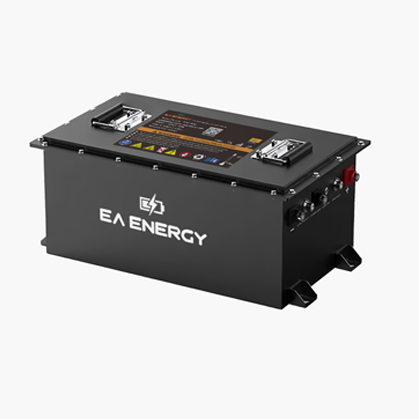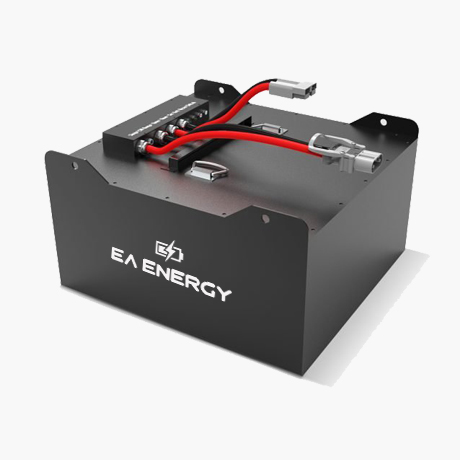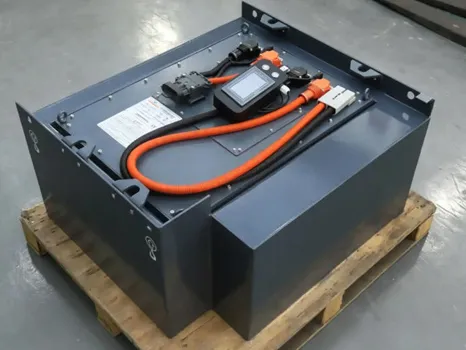
Warehouse safety programs in 2026 are under pressure to reduce preventable incidents — especially chemical exposure, slip hazards, and downtime from battery-related issues. Traditional lead-acid forklift batteries bring real risks: acid spills, hydrogen gas during charging, heavy battery change-outs, and corrosion cleanup. This guide explains how maintenance-free lithium systems improve safety and operations, and what to verify when choosing a lithium forklift battery factory for fleet conversion.
.jpg "/uploads/image/2026/05/08/48V lithium forklift battery (5).jpg")
Warehouse safety managers often focus on forklift traffic and load handling incidents. Battery-related hazards are less dramatic but more frequent — and many are entirely preventable.
| Lead-Acid Hazard | How It Occurs | Safety Consequence |
|---|---|---|
| Acid spills and splashes | During watering, topping-up, or accidental tipping | Chemical burn to skin and eyes; floor damage; EPA/OSHA compliance trigger |
| Hydrogen off-gassing during charging | Natural result of lead-acid charging chemistry | Explosion risk in enclosed charging rooms without adequate ventilation |
| Terminal corrosion | Ongoing acid vapor exposure at battery terminals | Electrical fault risk; handling injury from deteriorated connectors |
| Battery swap injuries | Heavy battery change-outs using cranes or exchange equipment | Crush, pinch, and dropped-load incidents |
| PPE compliance burden | Workers must be equipped and trained for acid exposure | Training cost; PPE budget; incident exposure when PPE is not used |
Every charging room ventilation requirement, every spill cleanup procedure, every planned battery swap adds time and cost to the operation. A multi-shift warehouse running a 30-truck lead-acid fleet can spend 25–40 hours per month on battery maintenance activities that have nothing to do with moving product.
| Task | Lead-Acid | Lithium Forklift Battery |
|---|---|---|
| Watering | Every 5–10 operating days | Eliminated — sealed system |
| Terminal acid cleanup | Monthly or after any spill event | Significantly reduced — no acid vapor |
| Equalization charging | Monthly to balance cells | Eliminated — BMS balances cells automatically |
| Hydrogen ventilation requirement | Charging room must meet ventilation standards | Eliminated or significantly reduced |
| Spill kit and PPE maintenance | Ongoing requirement near charging areas | Eliminated in normal operation |
| Specific gravity testing | Periodic state-of-charge verification | Eliminated — BMS monitors state of charge |
Removing acid-related maintenance changes the physical layout and staffing requirements of the charging area:
Charging zones can be located closer to operational areas without ventilation infrastructure
Less PPE storage and training administration
Maintenance staff time redirected from battery service to higher-value tasks
Cleaner floors and equipment — acid vapor contributes to general facility corrosion and cleanliness problems
A lithium forklift battery is a high-energy system operating in a demanding industrial environment. The engineering choices made by the factory determine whether it is reliably safe across its service life.
| Safety Feature | Function | What to Verify |
|---|---|---|
| Battery Management System (BMS) | Over-voltage, under-voltage, over-current, and short-circuit protection | Request protection threshold documentation and test evidence |
| Temperature monitoring | Cell and pack temperature measured continuously; charge/discharge restricted at limits | Confirm the temperature range and what actions the BMS takes at each threshold |
| Thermal management design | Heat dissipation or active cooling for high-duty applications | Ask for thermal performance data at rated continuous discharge current |
| Rugged enclosure | Protects cells and electronics from vibration, dust, and impact in forklift use | Confirm IP rating and vibration test standard |
| Fusing and disconnect | Properly rated fuse and manual service disconnect | Confirm fuse rating relative to battery capacity; service disconnect location |
| Fault codes and alerts | Visible or communicated fault status for operator and maintenance awareness | Confirm how faults are indicated and what triggers a fault condition |
Installation and wiring diagram
BMS fault code list and recommended actions
Maintenance manual (even if maintenance is minimal)
Charger compatibility specification
Safety data sheet for the cell chemistry
A factory that cannot provide these documents for an industrial forklift battery is not ready to supply a commercial fleet program.
Traditional lead-acid forklift fleets in multi-shift operations require battery swapping — removing a depleted battery and installing a charged one between shifts or mid-shift. This process is one of the highest-risk battery-related activities:
Batteries weigh 500–1,500 kg depending on forklift class — handling requires a crane, roll-out tray, or battery changer
Incorrect procedure creates crush and pinch hazards
Transfer between compartments creates spill risk if a battery is cracked or leaking
Lithium forklift batteries support opportunity charging — plugging in during operator breaks, lunch periods, or shift transitions to partially recharge without a full battery swap cycle.
| Scenario | Lead-Acid (2-shift operation) | Lithium with Opportunity Charging |
|---|---|---|
| Battery changes per day | 1–2 per truck | 0 — opportunity charge during breaks |
| Battery handling incidents | Proportional to swap frequency | Reduced to near zero |
| Charging room activity | High — multiple batteries cycling through | Reduced — trucks charge in place |
| Shift planning complexity | Schedule battery change windows | No battery change window needed |
Confirm charger compatibility before deploying opportunity charging — the charger must support partial-cycle starts and have a lithium-compatible profile
Define a charging SOP that specifies when and where opportunity charging occurs — consistency protects battery life and maintains predictable availability
Designate safe charging zones with appropriate cable management to prevent trip hazards
| Parameter | What to Confirm | How to Verify |
|---|---|---|
| System voltage | Must match the forklift's traction motor system | Check forklift nameplate or service manual |
| Battery compartment dimensions | Lithium pack must fit the battery compartment | Measure the compartment L × W × H with current battery removed |
| Battery weight | Lithium is typically 30–60% lighter than equivalent lead-acid | Confirm counterweight implications with the forklift manufacturer if weight reduction is significant |
| Connector type | Must match the forklift's battery connector | Identify connector model or request an adapter |
| Mounting configuration | Hold-down and retention must be safe for the specific forklift model | Confirm mounting points align or that the factory provides an adapter bracket |
| Savings Category | Annual Value Per Truck |
|---|---|
| Watering and maintenance labor eliminated | USD 200–400 |
| Battery swap labor and equipment time reduced | USD 150–350 per truck in multi-shift operation |
| Energy efficiency improvement (lithium 97%+ vs lead-acid 70–80%) | USD 100–250 depending on electricity rate |
| Reduced downtime — more consistent uptime | Variable; USD 50–200 depending on shift intensity |
| Extended service life (3–5x lead-acid cycle life) | USD 200–500 per year amortized over service life |
Most forklift fleets achieve ROI within 2–3 years — faster for high-utilization multi-shift operations where labor and swap costs are highest.
Start with a pilot of 3–5 trucks covering the most representative duty cycles in the operation
Run for 60–90 days; compare maintenance log hours, incident reports, and uptime records against the lead-acid fleet
Confirm charger compatibility and charging SOP effectiveness during the pilot
Use pilot data to build the business case for full fleet conversion
Safety and productivity align when unnecessary hazards are removed from the equation. Upgrading forklift batteries to maintenance-free lithium eliminates acid spill risk, reduces corrosion-related failures, removes the need for planned battery swaps in many operations, and minimizes heavy battery handling incidents. The key is partnering with a qualified lithium forklift battery factory that can match your specific forklift models, duty cycles, and charging workflow — and provide the documentation and support to deploy the system safely.
Q1: Do lithium forklift batteries completely eliminate acid spill risk?
Yes, for normal operation. Lithium batteries do not contain liquid electrolyte in the way that flooded lead-acid batteries do, so the routine hazards of watering, electrolyte spills, and acid vapor exposure are removed. In an extreme mechanical damage scenario any battery chemistry requires careful handling, but the day-to-day acid exposure hazard is eliminated.
Q2: What safety features should I require from a lithium forklift battery factory?
A robust Battery Management System with over-voltage, under-voltage, over-current, short-circuit, and temperature protections. A properly rated fuse and service disconnect. A rugged IP-rated enclosure suitable for forklift vibration and industrial environments. Comprehensive documentation including the BMS fault code list, wiring diagram, and charger compatibility specification.
Q3: Can lithium forklift batteries be opportunity charged during operator breaks?
Yes — opportunity charging during breaks and shift transitions is one of the primary operational advantages of lithium for multi-shift forklift operations. This can eliminate battery swapping entirely, removing one of the highest-risk maintenance activities in the charging area. Confirm that your chargers are lithium-compatible and that a clear charging SOP is in place before deploying opportunity charging.
Q4: Will a lithium battery pack fit into my existing forklifts?
In most cases yes, but fitment must be verified before purchase. Confirm the system voltage matches the forklift, measure the battery compartment dimensions, check the connector type, and assess whether the weight reduction from lithium (typically 30–60% lighter) requires a counterweight adjustment to maintain the forklift's rated load capacity and stability.
Q5: How do I estimate ROI for converting my forklift fleet to lithium?
Add up annual labor costs for watering, corrosion cleaning, and battery swap operations across the fleet. Estimate the value of reduced downtime from more consistent battery availability. Calculate energy efficiency savings from the higher charge efficiency of lithium. Compare the total annual savings against the installed cost premium for lithium batteries (net of avoided lead-acid replacement costs). Most multi-shift forklift operations achieve payback within 24–36 months.
 English
  Lithium Golf Cart Battery
  Low Speed Vehicle Battery
  Lithium Forklift Battery
  Aerial Work Platform Battery
  Floor Cleaning Machine Battery
  Lithium Marine Battery
  Residential ESS
  Commercial & Industrial ESS
  Truck Electrical System
  RV Electrical System