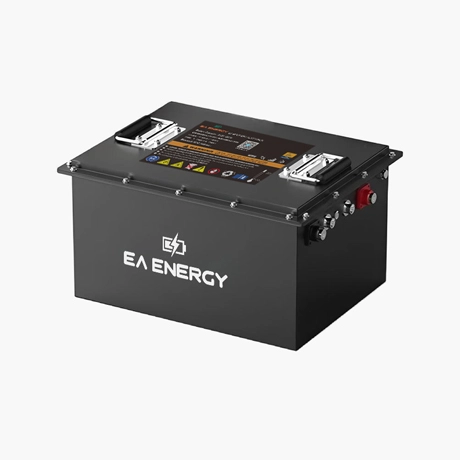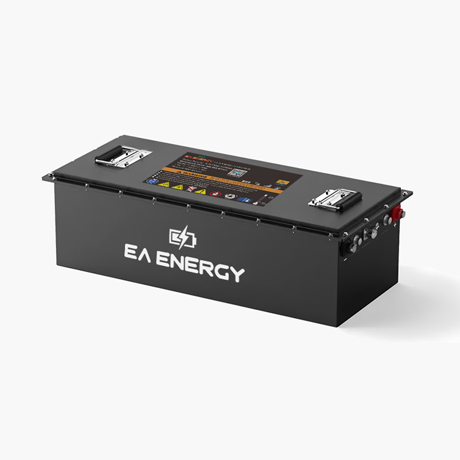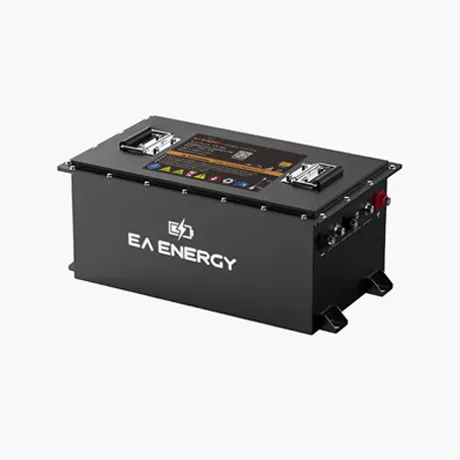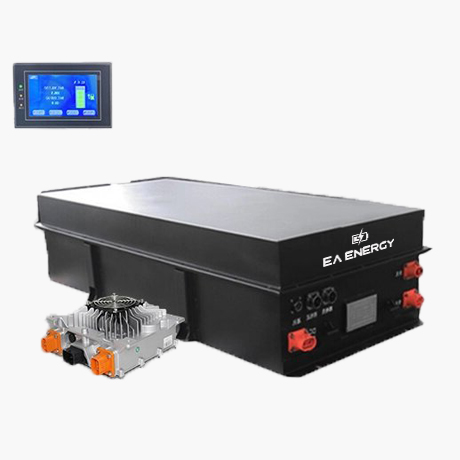
For golf clubs and fleet operators in 2026, battery maintenance is more than a shop task — it is recurring labor, downtime, and replacement cost that quietly erodes margins. Upgrading to a 48V lithium golf cart battery can eliminate many routine lead-acid chores: watering, corrosion cleanup, equalization cycles, and frequent performance troubleshooting. This guide explains how the savings happen and what to check when comparing lithium golf cart batteries 48V for sale for a fleet conversion.
Fleet managers who compare battery costs often look only at purchase price. The real cost of a lead-acid battery fleet runs through a long list of recurring labor and operational impacts that add up predictably over a season.
| Lead-Acid Cost Category | Frequency | Labor Per Cart Per Month |
|---|---|---|
| Watering (distilled water top-up) | Every 2–4 weeks during active use | 15–30 minutes per battery set |
| Terminal cleaning and corrosion treatment | Monthly | 20–30 minutes per cart |
| Equalization charging | Monthly or after deep discharge | Requires planned downtime |
| Performance troubleshooting | As needed — voltage sag, won't hold charge | 30–90 minutes per incident |
| Cart rotation management | Ongoing — weak batteries pulled from rotation | Reduces available fleet; displaces revenue |
| Early replacement | 3–5 year replacement cycle typical | Full battery cost plus labor |
A 30-cart fleet running a standard lead-acid maintenance program can consume 20–40 staff hours per month in battery-related tasks during peak season. At a labor cost of USD 25–35 per hour, that represents USD 500–1,400 per month — before accounting for downtime revenue loss when carts are pulled from rotation.
This is the cost that lithium golf cart batteries 48V for sale programs are designed to eliminate — not the upfront hardware cost comparison.
| Task | Lead-Acid | 48V Lithium Golf Cart Battery |
|---|---|---|
| Watering | Required every 2–4 weeks | Eliminated — sealed system |
| Terminal corrosion cleanup | Monthly cleaning | Significantly reduced — lithium chemistry does not produce the same acid vapor |
| Equalization charging | Required monthly to balance cells | Eliminated — BMS handles cell balancing automatically |
| Specific gravity testing | Required periodically | Eliminated — BMS monitors state of charge |
| Deep discharge recovery | Time-consuming troubleshooting | BMS prevents deep discharge; less recovery needed |
Beyond reducing maintenance labor, the 48V lithium golf cart battery delivers a more consistent operating experience that reduces service calls from golfers and starters:
Stable voltage under load: lead-acid voltage sags significantly as the battery depletes; lithium maintains near-constant voltage through most of the discharge, providing consistent speed and torque
Predictable range: the discharge curve is flat and predictable; staff can trust SOC indicators rather than guessing from voltage readings
Faster recovery: a lithium battery can be partially charged between rounds and return to full performance; a partially charged lead-acid battery delivers noticeably degraded performance
Fewer carts waiting in the shop during peak tee times. Fewer service tickets from golfers reporting slow or underpowered carts. More predictable fleet scheduling because battery behavior is consistent.
| Charging Characteristic | Lead-Acid | 48V Lithium |
|---|---|---|
| Charge efficiency | 70–85% — significant energy lost as heat | 95–98% — very little energy wasted |
| Charging time (full cycle) | 8–12 hours typical | 2–4 hours for a quality lithium system |
| Partial charge tolerance | Poor — partial charging shortens lead-acid cycle life | Excellent — lithium is not harmed by partial charging |
| Charge profile requirement | Must complete full cycle regularly | Flexible — partial top-up between rounds is acceptable |
In a busy golf operation, cart availability during morning peak tee times is a revenue-critical constraint. A lead-acid fleet that was heavily used the afternoon before requires a full overnight charge to be ready — if anything disrupts that charging cycle, carts may not be ready.
A lithium fleet can be meaningfully recharged in a 2–3 hour window between heavy use periods. A cart returned at noon can be charged and ready for a 3 PM round, which effectively increases fleet utilization without adding carts.
Charger compatibility: not all chargers designed for lead-acid will work correctly with lithium batteries. Confirm whether the battery supplier recommends a lithium-specific charger or whether the existing charger is compatible with the battery BMS
Power capacity: faster charging means higher instantaneous power draw — confirm the charging barn electrical supply can handle the simultaneous charging load of the converted fleet
SOC display: confirm the battery includes a state-of-charge display compatible with the cart's existing SOC gauge or that a display module is included.
A 48V lithium golf cart battery without a robust Battery Management System is not suitable for fleet deployment. The BMS is the intelligence layer that protects the battery, the cart, and the operator.
| Protection Function | What It Does | Why It Matters for Fleets |
|---|---|---|
| Over-voltage protection | Prevents charging above the safe cell voltage limit | Protects cells from damage during charging; extends cycle life |
| Under-voltage cutoff | Stops discharge before cells reach damaging low state | Prevents the deep discharge that permanently reduces capacity |
| Over-current protection | Limits current during heavy loads | Protects against motor controller faults or wiring issues |
| Short-circuit protection | Disconnects immediately on dead short | Safety critical — prevents fire or explosion risk |
| Temperature monitoring | Monitors cell temperature; restricts charge or discharge in extreme conditions | Essential for carts stored or charged in hot or cold conditions |
| Cell balancing | Equalizes charge across all cells in the pack | Maintains full pack capacity; prevents individual cell degradation |
| Factor | Best Practice | Impact |
|---|---|---|
| Amp-hour sizing | Select capacity that provides 20–30% buffer above daily demand | Avoids regular deep cycling; significantly extends cycle life |
| Off-season storage | Store at 50–60% SOC; charge monthly if stored for extended periods | Prevents capacity loss during winter storage |
| Operating temperature | Avoid charging below 0°C without low-temperature rated battery | Low-temperature charging damages lithium cells permanently |
| Cycle life expectation | Quality lithium cells: 1500–3000 cycles at 80% depth of discharge | 3–5x longer service life than comparable lead-acid |
Confirm warranty covers the full battery pack including cells, BMS, and casing
Define the warranty service model — depot repair, on-site service, or replacement unit policy
Ask specifically about the response time for a warranty claim during peak golf season
| Item | What to Confirm |
|---|---|
| Cart model compatibility | Battery dimensions must fit the cart's battery tray without modification |
| Voltage and connector | 48V nominal; confirm connector type matches cart wiring or adapter is included |
| Cable and fuse | Confirm cable gauge matches current rating; appropriate fuse or disconnect included |
| SOC gauge compatibility | Confirm display module works with the cart's existing gauge |
| Mounting security | Confirm hold-down hardware is included and appropriate for the cart's battery compartment |
| Savings Category | How to Calculate | Typical Annual Value |
|---|---|---|
| Watering labor saved | Hours per month × months × hourly rate | USD 200–500 per cart |
| Corrosion and cleaning labor | Hours per month × months × hourly rate | USD 100–250 per cart |
| Troubleshooting and shop time | Incidents per year × average hours × hourly rate | USD 100–300 per cart |
| Energy savings (charge efficiency) | kWh saved × electricity rate × annual cycles | USD 30–80 per cart |
| Extended battery life | (Lead-acid replacement cost − lithium amortized cost) per year | Positive when cycle life is 3x+ lead-acid |
Convert 5–10 carts first — a representative subset including both high-use and moderate-use units
Run the pilot for one full season; compare maintenance log hours, service tickets, and availability records against the lead-acid fleet
Calculate actual ROI from measured data, not projections
Use the pilot data to build the business case for full fleet conversion
For golf clubs, battery maintenance is a recurring labor line item that lithium conversion can dramatically reduce. A 48V lithium golf cart battery upgrade simplifies daily operations, stabilizes performance through peak tee times, and keeps more carts available when the course is at capacity. The key is choosing the right amp-hour capacity and protection features when evaluating lithium golf cart batteries 48V for sale, then rolling out with a measured pilot that generates real ROI data before committing to the full fleet.
Q1: Do 48V lithium golf cart batteries really eliminate all maintenance?
They eliminate the highest-labor lead-acid tasks — watering, equalization, and corrosion cleanup — which represent the majority of routine battery maintenance time. Basic checks remain: periodic cable inspection, mounting security confirmation, and charging SOP compliance. But the total maintenance burden is typically 70–85% lower than a lead-acid fleet.
Q2: How much labor can a golf club realistically save by switching to lithium?
A 30-cart club running a standard lead-acid maintenance program commonly spends 20–40 staff hours per month on battery tasks during peak season. Lithium conversion can reduce this to 5–8 hours for basic checks — a saving of 15–32 hours per month. At USD 25–35 per hour, that represents USD 375–1,120 per month in direct labor savings, before counting downtime and revenue recovery from better cart availability.
Q3: Are lithium golf cart batteries 48V for sale compatible with existing chargers?
Compatibility depends on the specific battery chemistry and BMS requirements. Some lithium batteries include a BMS that can accept input from a standard lead-acid charger profile; others require a lithium-specific charger to charge correctly and safely. Always confirm compatibility with the battery supplier before assuming existing chargers will work — an incompatible charger can damage the battery or trigger BMS protection shutdowns.
Q4: What safety features are essential in a 48V lithium golf cart battery for fleet use?
A fleet-grade lithium battery must include a Battery Management System with over-voltage and under-voltage cutoffs, over-current and short-circuit protection, cell balancing, and temperature monitoring and protection. Temperature protection is particularly important for fleets in hot climates or where batteries are charged in non-climate-controlled spaces.
Q5: What information do I need to get an accurate battery recommendation for my fleet?
Provide the golf cart model and year, motor and controller specifications if available, average daily use per cart (holes played or hours of operation), typical terrain (flat, hilly, or mixed), the number of carts in the fleet, current charging setup (charger brand and model), and the temperature range the carts operate and are stored in.
 English
  Lithium Golf Cart Battery
  Low Speed Vehicle Battery
  Lithium Forklift Battery
  Aerial Work Platform Battery
  Floor Cleaning Machine Battery
  Lithium Marine Battery
  Residential ESS
  Commercial & Industrial ESS
  Truck Electrical System
  RV Electrical System